
How Much Does a Solar Battery Cost in NSW?
The total cost of a battery installation cannot be determined from battery capacity alone.
A proper quote can be affected by:
Battery size and usable capacity
A larger battery normally involves more equipment, but the correct question is not simply:
“What is the biggest battery I can buy?”
The better question is:
“How much storage can my home realistically charge and use?”
Existing solar system
The installer needs to assess whether the existing solar system produces enough surplus energy for the proposed battery.
Inverter configuration
Some properties may be suitable for a particular battery configuration, while others may require inverter changes or a different system design.
The Clean Energy Regulator has specific rules for battery installations using existing solar PV and inverter equipment, including requirements relating to VPP capability for the inverter connected to the battery.
Single-phase or three-phase supply
The phase configuration of the property can affect equipment selection and system design.
Backup requirements
A standard battery installation and a system designed to maintain selected circuits during a grid outage are not necessarily the same scope of work.
The customer should clearly identify which circuits and appliances are expected to operate during a blackout.
Switchboard and installation work
Depending on the property, the installation may require additional electrical work, switchboard changes, cabling, protection equipment or other site-specific work.
For this reason, homeowners should compare complete installed system quotations, not just battery hardware prices.
How to Apply for the Solar Battery Discount in NSW
For the federal Cheaper Home Batteries Program, most customers do not need to submit a separate government rebate application.
The Australian Government says customers can generally access the support through an accredited installer or retailer, which may provide the benefit as an upfront price reduction or a rebate after installation. Consumers can also choose to handle their own STCs through the REC Registry, but must not assign the STC creation rights to the installer or retailer if taking that route.
A practical buying process is:
Step 1: Review your electricity usage
Look at recent electricity bills and, where possible, interval or smart-meter data.
Identify:
- average daily consumption;
- daytime use;
- evening and overnight consumption;
- seasonal peaks;
- solar exports;
- current feed-in tariff; and
- expected future electricity use.
Step 2: Review the existing solar system
Check:
- solar panel system size;
- inverter model and capacity;
- single-phase or three-phase supply;
- age and condition of the system; and
- approximate daytime surplus generation.
Step 3: Decide what you want from the battery
Are you mainly trying to:
- reduce grid electricity purchases?
- store more surplus solar?
- improve energy independence?
- operate selected loads during an outage?
- prepare for an EV?
- operate a pool or other high-consumption equipment?
The answer should influence system sizing.
Step 4: Obtain a complete system proposal
Ask for a proposal showing:
- battery make and model;
- nominal and usable capacity;
- inverter configuration;
- installation scope;
- backup scope, where applicable;
- government discount treatment;
- warranty details; and
- final customer price.
Step 5: Check other NSW support options
Depending on eligibility, also investigate:
- the NSW VPP incentive;
- Home Energy Saver zero-interest loan;
- Home Energy Saver discount when applications open.
Can I Add a Battery to My Existing Solar System?
In many cases, yes.
The Cheaper Home Batteries Program allows an eligible battery to be installed with a new or existing solar PV system. The Clean Energy Regulator states that the solar system associated with the battery must meet applicable requirements and provides specific rules covering existing solar systems and inverter configurations.
Before proceeding, the property should be checked for:
- solar system size;
- inverter compatibility;
- battery compatibility;
- switchboard condition;
- phase configuration;
- suitable battery installation location;
- solar export profile; and
- backup requirements.
An existing solar system does not automatically mean every battery is suitable for the property.
What Size Battery Is Right for Your Home?
There is no single answer.
For a simple example, two families may both consume 30 kWh of electricity each day.
Home A uses most of its power during daylight hours.
Home B exports significant solar generation during the day but consumes heavily between 5 pm and midnight.
Although their total daily consumption is similar, their ideal battery requirements may be quite different.
This is why battery sizing should consider the time of consumption, not only the total number of kWh shown on a bill.
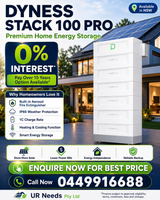
Dyness Stack 100 Pro Solar Battery Options in NSW
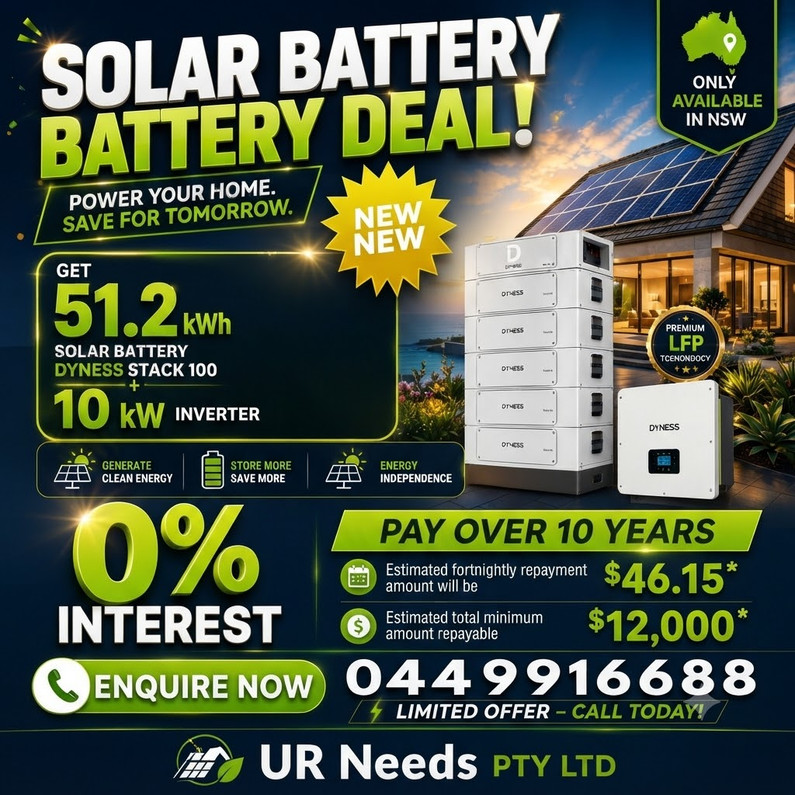
UR Needs offers solar and battery solutions including Dyness Stack 100 Pro options, subject to site assessment, system design, availability and compatibility.
Depending on the final system configuration, product features can include:
✅ Built-in aerosol fire extinguisher
✅ IP66 weather protection
✅ 1C charge rate
✅ Heating and cooling function
✅ Scalable battery architecture
✅ Smart energy monitoring
✅ Solar storage and backup applications, subject to system design and configuration
For larger battery installations, rebate treatment should be checked carefully because federal support is calculated from usable capacity and the STC support rate tapers across capacity bands.
Frequently Asked Questions
How much is the solar battery rebate in NSW in 2026?
There is no single fixed rebate amount. The federal Cheaper Home Batteries Program provides support through STCs and the government describes the program as offering around a 30% discount across a range of eligible battery systems. The exact benefit varies with usable capacity, applicable STC calculations and other scheme factors.
Can I combine the federal battery discount with the NSW VPP incentive?
Yes, subject to meeting the relevant program requirements. The NSW Government states that the VPP incentive can be combined with the Australian Government's Cheaper Home Batteries Program.
Is there a zero-interest solar battery loan in NSW?
The NSW Home Energy Saver program currently offers eligible homeowners and landlords zero-interest loans of up to $15,000, repayable over up to 10 years, for eligible upgrades including residential batteries. Eligibility requirements apply.
Is the NSW $4,000 energy discount available now?
As of July 2026, the NSW Government lists the Home Energy Saver discount of up to $4,000 as coming soon. The zero-interest loan component is already open.
Can I get a battery rebate if I already have solar panels?
Potentially, yes. Eligible battery installations can be connected with an existing solar PV system, subject to the federal program's eligibility and technical requirements.
Do I need to apply directly to the government for the federal battery discount?
Usually not. The federal government states that consumers can generally receive support through an accredited installer or retailer, or alternatively claim and trade eligible STCs directly through the REC Registry if they retain the relevant creation rights.
Get a Solar Battery Quote in NSW
Choosing the right solar battery requires more than selecting a brand or comparing headline prices.
A properly designed proposal should consider:
Your existing solar system
Daily and evening electricity consumption
Solar export levels
Single-phase or three-phase supply
Battery capacity requirements
Backup requirements
Future EV or electrical loads
Available government support and eligibility
Talk to UR Needs about your solar and battery requirements
? Solar Battery Solutions
☀️ Solar and Battery Packages
? Existing Solar Battery Upgrades
⚡ Backup System Options
? Battery System Sizing
? Finance Options Available to Eligible Customers*
? Call UR Needs Pty Ltd on 0449 916 688
? Solar and battery solutions available across NSW
Contact us today for a property-specific solar and battery proposal and our best available pricing.
Recent Posts
-
Dyness Stack 100 Pro 30.72kWh Battery Deal NSW | $6,500 Installed
Dyness Stack 100 Pro (30.72kWh): Premium Home Energy Storage Now Available in NSW With rising electr …28th Jul 2026 -
How Much Does a Solar Battery Cost in NSW?
The total cost of a battery installation cannot be determined from battery capacity alone. A proper …7th Jul 2026 -
NSW Zero-Interest Loans for Home Batteries
NSW Zero-Interest Loans for Home Batteries Another important change in 2026 is the NSW Home Energy S …7th Jul 2026